Living heritage

Culture of Gujarat

Architecture, sacred geography, bardic memory, and martial arts — the living heritage of the Rajput houses of Gujarat.

Heritage & craft

The Sun Temple of Modhera (1026–1027 CE)

The Sun Temple of Modhera (1026–1027 CE)

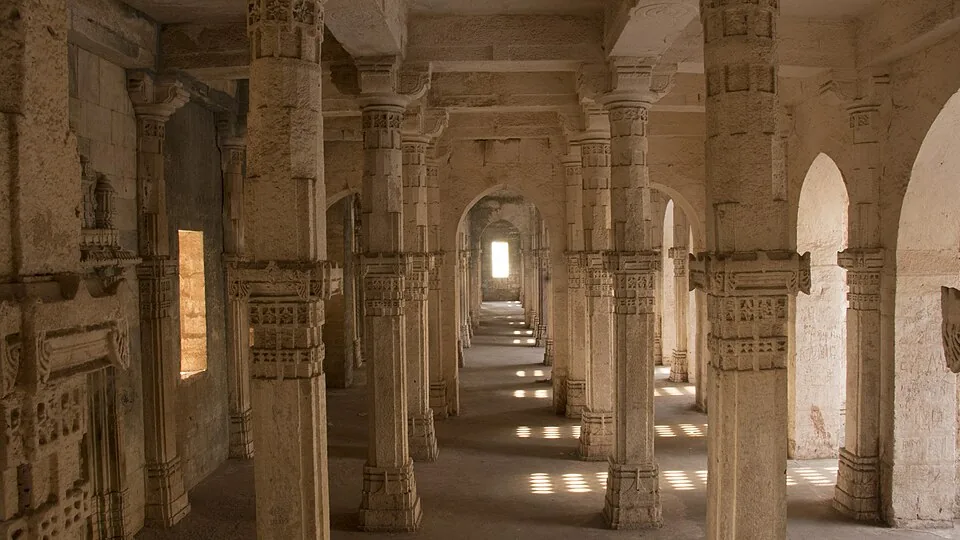
Built in 1026–1027 CE during the reign of King Bhimdev I of the Solanki (Chaulukya) dynasty, the Sun Temple of Modhera stands on the banks of the Pushpavati river in Mehsana district. A crowning jewel of Maru-Gurjara architecture, it comprises the Guda Mandap (inner sanctum where equinox rays illuminated the golden sun icon), the intricately carved Sabha Mandap on 52 ornate pillars, and the stepped Surya Kund (Ramakund) adorned with 108 miniature shrines.

Sun Temple, Modhera · Wikimedia Commons

Rani ki Vav, Patan (1063 CE)

Rani ki Vav, Patan (1063 CE)

Commissioned in 1063 CE by Queen Udayamati in loving memory of her husband King Bhimdev I Solanki, Rani ki Vav in Anhilwad Patan is a UNESCO World Heritage stepwell and a triumph of subterranean Maru-Gurjara art. Designed as an inverted temple on the banks of the Saraswati river, its seven terraced storeys house over 500 principal sculptures celebrating Vishnu's Dashavatara, demonstrating royal Rajput patronage of sacred water architecture in North Gujarat.

Rani ki Vav, Patan · Wikimedia Commons

Pavagadh & Champaner Citadel

Pavagadh & Champaner Citadel

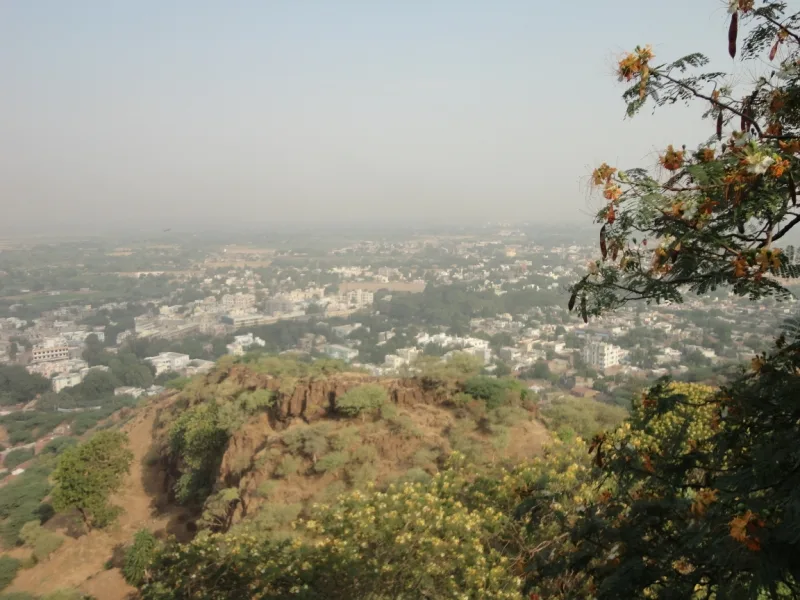
Rising steeply above the plains of Panchmahal in eastern Gujarat, the volcanic peak of Pavagadh was the historic fortified capital of the Khichi Chauhans under Rawal Patai (Jaysingh Chauhan). Crowned by the sacred Mahakali Shaktipeeth and defended by concentric stone fortifications, gates, and perennial water cisterns, it served for centuries as the unassailable Rajput gateway between Gujarat and Malwa.

Pavagadh Citadel · Wikimedia Commons

Palace & Darbargadh Architecture

Palace & Darbargadh Architecture

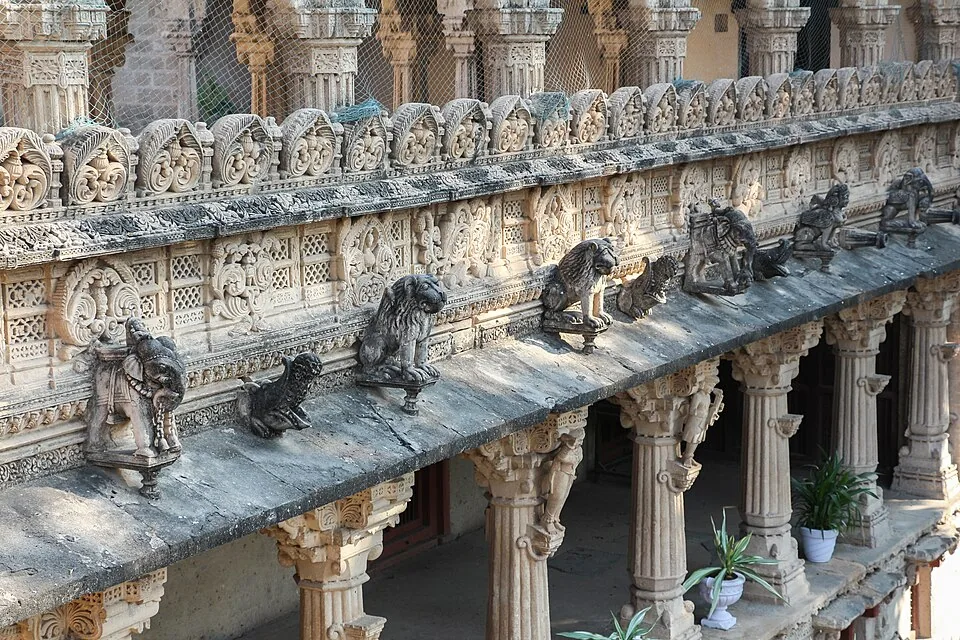
From the carved jharokha balconies of Wankaner and Gondal's Naulakha Palace in Saurashtra to the ancient royal Darbargadhs of Mansa, Sihor, and Pethapur, and the riverside palaces of Rajpipla and Chhota Udepur, princely architecture fused classical Rajput stone-carving with European and riverine idioms into an enduring regional heritage.

Naulakha Palace, Gondal · Wikimedia Commons

Paliyas & Memorials of Valour

Paliyas & Memorials of Valour

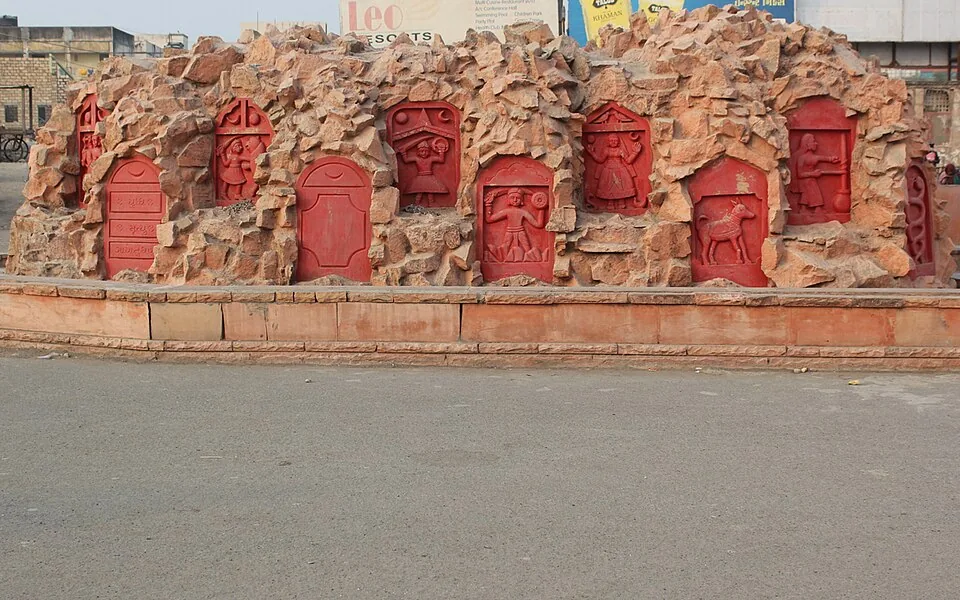
Across all five regions of Gujarat stand paliyas — carved memorial hero stones raised to warriors who gave their lives in defense of the motherland, cows, and communities. From the famed battlefield of Bhuchar Mori in Saurashtra to the borders of Kutch, the plains of Patan and Panchasar in North Gujarat, and the river passes of Rewa Kantha, they commemorate unyielding Rajput valour alongside the oral scrolls of the Barots and Charans.

Warrior paliyas, Somnath · Wikimedia Commons

Textiles, Patola & Royal Crafts

Textiles, Patola & Royal Crafts

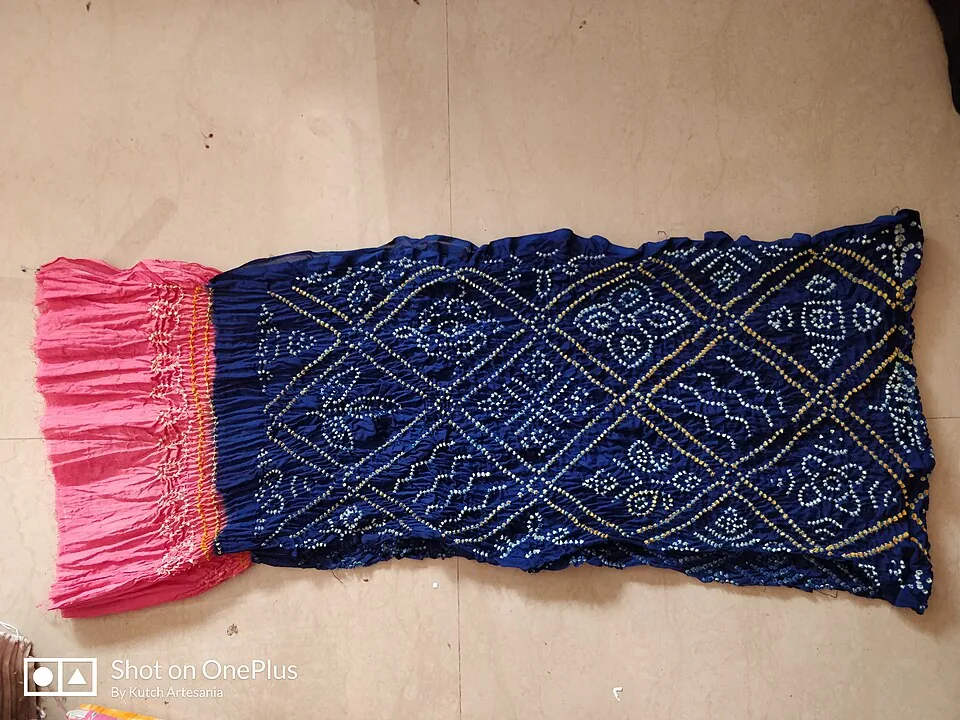
Gujarat's textile brilliance was deeply nurtured by royal Rajput patronage — from the world-renowned double-ikat Patan Patola patronized by Maharaja Kumarapala Solanki in North Gujarat, to the exquisite mirror-embroidery of Kutch and the vibrant bandhani tie-dye of Saurashtra and Jamnagar, courtly attire wove regional heritage into everyday and ceremonial life.

Bandhani textile · Wikimedia Commons

Forts & Strategic Strongholds

Forts & Strategic Strongholds

The citadels of Gujarat formed the backbone of regional sovereignty — from the ancient rock-cut Uparkot of Junagadh and the celebrated hill fort of Idargadh in Sabarkantha, to the island arsenal of Lakhota, the desert ramparts of Bhujia Fort, and the clifftop citadel of Pavagadh, each stronghold guarded a clan's honor through centuries of siege.

Uparkot citadel, Junagadh · Wikimedia Commons

Palaces of Rewa Kantha & Central Gujarat

Palaces of Rewa Kantha & Central Gujarat

Along the sacred Narmada (Rewa) river and the eastern forested tracts arose the historic Rajput principalities: the Gohils of Rajpipla (Rajwant Palace), the Khichi Chauhans of Devgadh Baria and Chhota Udepur (Kusum Vilas Palace), the Solankis of Lunavada, and the Vaghelas of Sanand and Bhadarwa. Their architectural heritage blended Rajput jharokhas with classical river ghats, guarding Gujarat's eastern frontiers.

Darbargadh & Palace Architecture · Wikimedia Commons

The lake fortress of Lakhota

The lake fortress of Lakhota

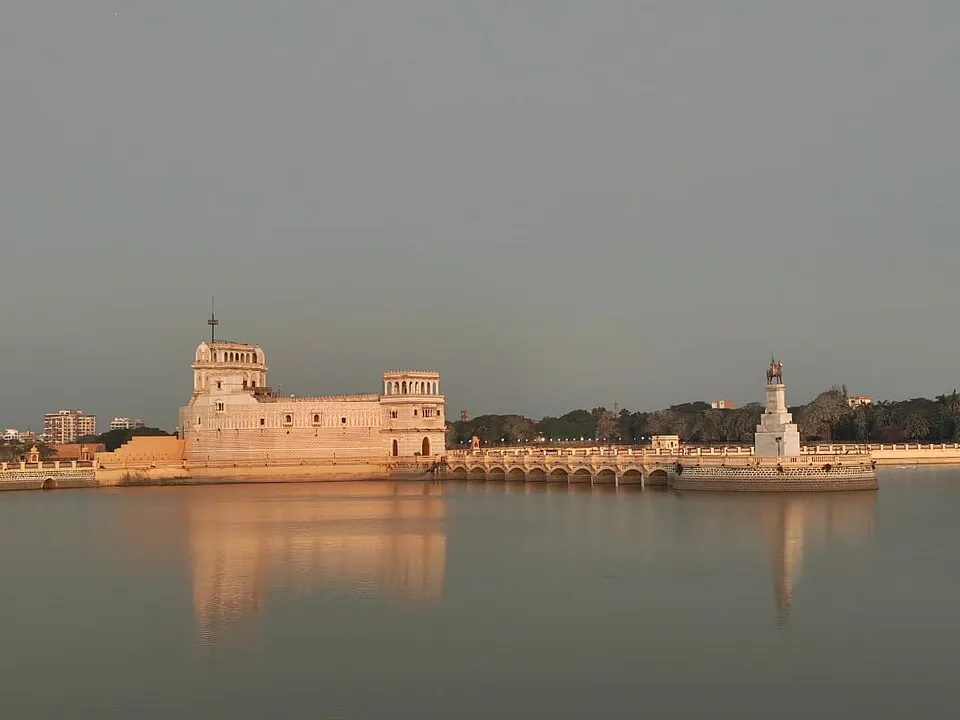
In the middle of Jamnagar’s Ranmal lake stands the Lakhota fort of the Jams of Nawanagar — a round island arsenal and pleasure-house, today a museum of the Jadeja capital’s courtly past.

Lakhota fort, Jamnagar · Wikimedia Commons

The Indigenous Horse Breeds

The Indigenous Horse Breeds

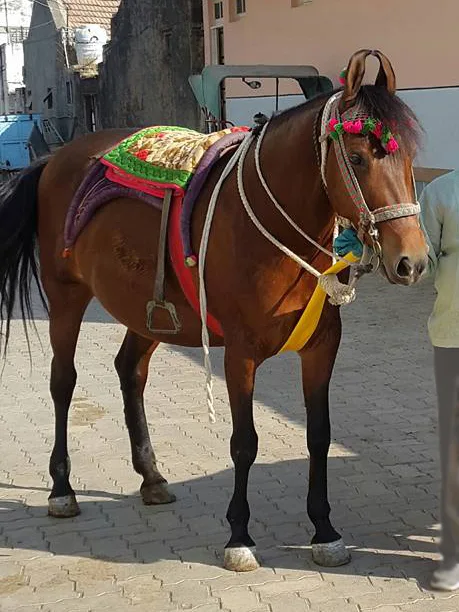
Cavalry officers of the 1810s rated the Kathiawari and Kutchi horses above every breed in India. The Panchal pastures around Chotila and the desert runs of Kutch raised stock celebrated for inward-curving ear tips, desert stamina, and heroic fidelity in every Rajput ballad.

Kathiawari horse · Wikimedia Commons

Sacred geography

Dwarka

Capital of Shri Krishna after he left Mathura; its temples on the Gomti creek draw pilgrims from all India.

Somnath (Prabhas Patan)

One of the twelve jyotirlingas; plundered thrice before 1700 A.D. and each time restored.

Girnar

The 3,666-foot massif above Junagadh, crowned with Jain temples and ringed by Ashoka’s rock edicts.

Shatrunjaya (Palitana)

Hundreds of Jain temples on the sacred hill above the Gohil state of Palitana.

Prachi

The tirtha east of Prabhas where worship belongs to the ancestors: a bath in its kund is believed to still their unquiet influence, and the childless come for blessing.

Pindtarak

A spring of pink-tinged water on the borders of Okhamandal, held deeply sacred; offerings for the departed are made at its edge.

Tulsi Shyam

Hot springs and a shrine of Krishna deep in the Gir; the heated pools are believed to heal.

Nishkalank (Nakalang)

The Shiva shrine on the tidal flats near Koliak — reached on foot only when the sea draws back.

Gopnath

A windswept shrine of Shiva on the cliffs near Talaja, linked in memory with the saint-poet Narsinh Mehta.

Dudhrej

The great temple near Wadhwan whose chief patrons are the Rabari herders — a reminder that every community of the peninsula keeps its own sacred geography.

Arasuri Ambaji

Ancient shaktipeeth nestled in the Banaskantha Aravalli hills, sacred kuldevi shrine guarded for generations by the Parmar Maharanas of Danta.

Pavagadh (Mahakali Mandir)

Historic volcanic citadel peak crowned by the Mahakali temple, sanctuary and spiritual guardian of Rawal Patai and the Khichi Chauhans.

Mata no Madh

Sacred ancestral seat of goddess Ashapura in western Kutch, venerated as kuldevi by the Jadeja rulers of Bhuj, Jamnagar, Rajkot, and Morvi.

Shamlaji (Gadadhar)

Ancient temple of Vishnu on the Meshwo river in Sabarkantha, a revered pilgrim shrine nestled on the historic border of North Gujarat and Rajasthan.

Shuklatirth & Chandod

Sacred confluence and pilgrimage ghats along the holy Narmada (Rewa), revered for ancestral rites and royal endowments by the princes of Rewa Kantha.

Modhera (Sun Temple)

The celebrated 11th-century Sun Temple built by King Bhimdev I Solanki on the Pushpavati river in Mehsana; famous for its intricate Sabha Mandap and stepped Surya Kund.

Rani ki Vav (Patan)

UNESCO World Heritage subterranean stepwell commissioned by Queen Udayamati in memory of King Bhimdev I Solanki; seven tiers of divine sculptures on the sacred Saraswati.